
Why a Grassroots Sports Club Sponsorship Strategy Is Key to Thriving

Why a Grassroots Sports Club Sponsorship Strategy Is Key to Thriving

Why a Grassroots Sports Club Sponsorship Strategy Is Key to Thriving

Costs are rising.

Decisions are slowing.

Funding is becoming harder to secure.

Nothing has collapsed.

But pressure is building.

For many grassroots sports clubs, this is not yet a crisis.

It is a shift.

And shifts create separation.

Some organisations adapt early.

Others continue as usual and feel the impact later.

This is a turning point.

The Risk Is Not That Sponsorship Disappears

Sponsorship does not vanish when conditions tighten.

It changes.

It becomes more selective.
It moves more slowly.
It is assessed more carefully.

That distinction matters.

The issue is not that funding disappears.

It becomes harder to access.

Sponsors do not stop investing.

They become more deliberate about where they invest.

Where Most Clubs Get Caught

Most grassroots clubs approach sponsorship in familiar ways.

Here is our club.
Here is our reach.
Here is your logo placement.

This has worked in the past.

But in tighter conditions, it is filtered quickly.

From a sponsor’s perspective, this does not answer a key question.

Why this opportunity?

The challenge is not interest.

It is justification.

Clarity removes uncertainty.

What Sponsors Will Be Looking For Next

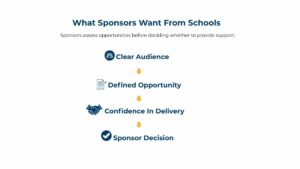
Sponsors are not asking more complicated questions.

They are asking clearer ones.

  • What outcome does this deliver?
  • Who benefits?
  • Why this opportunity over others?
  • How do we justify this internally?

If these are not answered clearly, decisions slow.

Or stop.

Sponsors are not rejecting clubs.

They are struggling to justify the opportunity.

That distinction matters.

The Clubs That Will Still Get Funded

Even in tighter conditions, some clubs will continue to secure support.

Not because they are larger.

Not because they have more reach.

Because they are clearer.

They position their opportunities around outcomes.

For example:

  • junior participation growth
  • female pathway development
  • inclusion programs
  • health and wellbeing outcomes

These are not just initiatives.

They provide structure for decision-making.

Sponsors can understand them.

Assess them.

Justify them.

The Shift You Need to Make

This is where the shift becomes practical.

Many clubs still focus on:

Exposure
Signage
Social posts

These are outputs.

Sponsors are now focused on outcomes.

This changes the positioning.

From:

Support our club

To:

Help us deliver this specific outcome

That shift matters.

Because it aligns with how sponsors think.

What That Looks Like in Practice

This does not require reinvention.

It requires structure.

A simple framework can guide this.

Step 1: Define an initiative

Not the entire club.

A specific program or focus area.

Something clear and contained.

Step 2: Articulate the outcome

Who benefits?
How many people are involved?
What changes as a result?

This is where clarity is built.

Step 3: Translate for sponsors

Connect the initiative to:

community impact
sponsor alignment
internal justification

This allows the opportunity to be evaluated.

Not interpreted.

The difference is structure.

Why This Matters More Right Now

Average proposals are the first to be overlooked.

They are familiar.

They are unclear.

They are easy to deprioritise.

Stronger proposals stand out.

Not because they are louder.

Because they are clearer.

Outcome-driven sponsorship does three things:

  • reduces perceived risk
  • speeds up decision-making
  • aligns with sponsor priorities

Clarity removes uncertainty.

The next six months will not be business as usual.

Some clubs will struggle.

Others will adapt.

The difference will not be effort.

It will be preparation.

A generic approach will lead to declining results.

An outcome-driven, structured approach will continue to attract support.

Because success in this environment is not about luck.

It is about clarity, structure, and readiness.

Sponsorship Ideas for Clubs: Why Too Many Ideas Are Holding Clubs Back

Sponsorship Ideas for Clubs: Why Too Many Ideas Are Holding Clubs Back

Sponsorship Ideas for Clubs: Why Too Many Ideas Are Holding Clubs Back

Clubs often believe more ideas will lead to more sponsors.

New initiatives.
New activations.
New concepts.

The intention is to create opportunity.

The result is often the opposite.

The Challenge Is Not a Lack of Ideas

Most organizations already have more ideas than they can implement.

Fundraisers.
Events.
Signage options.
Digital mentions.

The issue is not volume.

It is structure.

What Too Many Ideas Creates

When ideas are not structured:

  • each opportunity is different
  • there is no consistent offer
  • sponsors cannot easily compare options
  • conversations become longer and less clear

This increases complexity.

For both the club and the sponsor.

How Sponsors Experience This

From a sponsor’s perspective, variety without structure creates friction.

They are presented with multiple options but no clear framework.

This leads to questions:

  • Which option is most relevant?
  • How do these compare?
  • What is the overall value?

Without clarity, decisions slow down.

The Problem With Constantly Creating New Offers

New ideas often require new explanations.

New pricing.
New inclusions.
New delivery expectations.

This creates inconsistency.

And inconsistency reduces confidence.

A More Commercial Approach

Sponsors are not looking for endless options.

They are looking for clarity.

They prefer:

  • defined opportunities
  • structured levels
  • consistent inclusions

This allows for easier evaluation.

What Structured Sponsorship Looks Like in Practice

Instead of many separate ideas, structured sponsorship groups opportunities into a system.

For example:

  • clearly defined tiers
  • bundled inclusions
  • consistent timeframes

This reduces complexity.

And improves understanding.

Why This Improves Outcomes

When opportunities are structured:

  • sponsors can make faster decisions
  • value is easier to communicate
  • delivery becomes more consistent

Clubs also benefit from:

  • reduced workload
  • clearer planning
  • more predictable outcomes

Clubs do not need more ideas.

They need a way to organize the ideas they already have.

Because without structure, more options do not create more value.

They create more complexity.

And complexity is what often prevents sponsorship from progressing.

Why Your Club Is Not Positioned as an Audience: The Need for Structured Sponsorship for Clubs

Why Your Club Is Not Positioned as an Audience: The Need for Structured Sponsorship for Clubs

Why Your Club Is Not Positioned as an Audience

Most clubs describe what they do.

They talk about teams.
They mention events.
They highlight participation.

The challenge is not activity.

It is positioning.

What Sponsors Are Actually Looking For

Sponsors are not evaluating the club itself.

They are evaluating access.

Access to:

  • people
  • attention
  • community presence

This is a different lens.

Where Positioning Breaks Down

Clubs often describe:

  • involvement
  • history
  • contribution

But not access.

This creates a gap.

Sponsors cannot clearly see:

  • who they reach
  • how they reach them
  • how often that happens

The Impact of This Gap

Without clear audience positioning:

  • value feels unclear
  • opportunities are harder to assess
  • decisions take longer

Sponsors are left to interpret.

And interpretation creates uncertainty.

What Structured Sponsorship for Clubs Does

Structured sponsorship defines audience access.

It makes it visible and consistent.

This includes:

  • where exposure occurs
  • how often it occurs
  • who is reached

The difference is structure.

From Activity to Access

Clubs do not need to change what they do.

They need to change how it is presented.

From:

  • describing activities

To:

  • defining access

That shift matters.

A More Commercial Position

When positioned correctly, a club becomes:

a conduit to an audience.

This aligns with how sponsors think.

It allows for:

  • clearer value
  • easier comparison
  • stronger decision-making

Most clubs already have an audience.

That is not the issue.

The issue is whether that audience is clearly defined and structured as a commercial opportunity.

Because sponsors are not just supporting organisations.

They are accessing audiences.

Sports Club Sponsorship Audience: Why Clubs Undervalue What They Offer

Sports Club Sponsorship Audience: Why Clubs Undervalue What They Offer

Sports Club Sponsorship Audience: Why Clubs Undervalue What They Offer

Many clubs struggle because their sports club sponsorship audience is not clearly defined. Learn how clarity improves sponsorship outcomes.

Why Sports Clubs Undervalue Their Sponsorship Opportunities

Many sports clubs believe their challenge is pricing.

They assume sponsorship value is limited by what businesses are willing to pay.

The assumption is that local businesses have small budgets.

The challenge is not pricing.

The challenge is how the audience is defined.

The Real Issue: Audience Is Not Clearly Defined

Clubs often have strong participation.

They engage players, families, and broader community networks.

But this audience is rarely structured or clearly presented.

Instead, sponsorship is approached without defining:

  • Who the audience actually is
  • How large that audience is
  • How often that audience is engaged

This creates ambiguity.

And ambiguity leads to undervaluation.

Clarity removes uncertainty.

How Businesses Actually Assess Value

Businesses are not assessing clubs based on effort.

They are assessing access to an audience.

That distinction matters.

From a sponsor’s perspective, the key question is simple:

Who am I reaching?

This then extends into:

  • How many people are involved
  • How often they engage with the club
  • How visible the club is within the community
  • How relevant that audience is to the business

If the audience is not clearly defined, value becomes difficult to justify.

Even if the club has strong participation.

Where Clubs Go Wrong

Clubs often focus on what they need.

But they do not clearly define what they offer.

The issue is not effort.

It is the absence of audience clarity.

Common patterns include:

  • Referring to “the community” without detail
  • Not quantifying players, families, and supporters
  • Failing to show frequency of engagement
  • Presenting sponsorship as exposure rather than access

As a result, businesses are left to interpret the audience themselves.

Most will not.

Why This Leads to Undervaluation

When the audience is unclear, value is reduced.

Clubs then adjust pricing based on assumptions.

This creates a cycle:

  • Unclear audience
  • Lower perceived value
  • Lower pricing
  • Limited sponsorship outcomes

The challenge is not demand.

The challenge is definition.

What Structured Sponsorship Does Differently

Structured sponsorship begins with the audience.

It defines and presents it clearly before any offer is made.

The difference is structure.

Instead of general descriptions, clubs present:

  • Total number of players
  • Estimated family reach
  • Staff and volunteer footprint
  • Frequency of engagement (games, training, events)

This reframes the conversation.

From:

“We are looking for support”

To:

“This is the audience you are accessing”

That distinction matters.

How This Changes Sponsor Behavior

When the audience is clearly defined, decision-making becomes easier.

Businesses can:

  • Understand who they are reaching
  • Assess relevance to their market
  • Justify the opportunity internally
  • Compare it to other marketing options

Clarity removes hesitation.

It also positions the club differently.

Not as a request.

But as a channel.

A More Practical Way Forward

Clubs do not need to increase activity.

They need to define what already exists.

Most clubs already have:

  • Consistent participation
  • Regular engagement
  • Strong local presence

The audience is already there.

But without structure, it is not being translated into value.

Sponsorship outcomes are not driven by effort alone.

They are shaped by how clearly the audience is defined.

Clubs that do not articulate their audience will continue to undervalue their opportunities.

Clubs that define their audience create clarity.

And clarity changes how businesses assess value.

The difference is structure.

Sports Club Sponsorship Framework: Why Structure Drives Better Outcomes

Sports Club Sponsorship Framework: Why Structure Drives Better Outcomes

Sports Club Sponsorship Framework: Why Structure Drives Better Outcomes

A clear sports club sponsorship framework helps clubs present value, align with business goals, and improve sponsorship outcomes through structure.

Why Sports Clubs Need a Sponsorship Framework

Many sports clubs believe sponsorship improves with more activity.

More outreach. More meetings. More proposals.

The assumption is that volume leads to results.

The challenge is not activity.

The challenge is structure.

The Real Issue: No Defined Framework

Clubs often have strong community presence.

They engage players, families, and local networks consistently.

But sponsorship is rarely built on a framework.

Instead, it is handled through:

  • One-off conversations
  • Informal offers
  • Inconsistent pricing

This creates variation.

And variation makes it difficult for businesses to assess value.

Clarity removes uncertainty.

How Businesses Assess Sponsorship

Businesses are not responding to requests.

They are assessing opportunities.

That distinction matters.

From their perspective, the key considerations are:

  • Access to a defined audience
  • Clarity of the offer
  • Alignment with business objectives
  • Ease of internal approval

If these elements are unclear, the opportunity becomes difficult to progress.

Even if the club has strong community relevance.

Where Clubs Go Wrong

Clubs often focus on generating interest.

But they do not structure the opportunity.

The issue is not effort.

It is how the opportunity is framed.

Common gaps include:

  • No consistent sponsorship tiers
  • No clear valuation of assets
  • Limited articulation of audience reach
  • Conversations driven by need rather than clarity

This shifts the burden to the business to interpret value.

Most will not.

What a Sponsorship Framework Does Differently

A sponsorship framework introduces consistency.

It defines how opportunities are presented and assessed.

The difference is structure.

Instead of informal engagement, clubs operate with:

  • Defined sponsorship tiers and inclusions
  • Consistent valuation across opportunities
  • Clear audience data across players and families
  • Repeatable processes for presenting offers

This allows businesses to evaluate quickly.

And with confidence.

Structure reduces friction.

Why This Matters for Clubs

Without a framework, sponsorship becomes unpredictable.

Each conversation is different.

Each outcome varies.

With a framework, the process becomes consistent.

Clarity removes hesitation.

It also allows clubs to:

  • Present value with confidence
  • Maintain consistent pricing
  • Build repeatable sponsorship outcomes

A More Practical Approach

Clubs do not need to increase activity.

They need to organize what already exists.

Most clubs already have:

  • Defined audiences
  • Regular engagement
  • Ongoing visibility

The opportunity is already present.

But without a framework, it is difficult to translate into outcomes.

Sponsorship is not limited by access to businesses.

It is shaped by how clearly opportunities are structured.

Clubs that continue to operate without a framework will often see inconsistent results.

Clubs that adopt a structured approach create clarity.

And clarity changes how businesses respond.

The difference is structure.

7 Signs of an Ineffective Sponsorship System for Clubs

7 Signs of an Ineffective Sponsorship System for Clubs

7 Signs of an Ineffective Sponsorship System for Clubs

Most clubs believe they are “doing sponsorship.”

They have sponsors.
They have signage.
They have relationships.

The challenge is not activity.

It is whether that activity is structured.

1. Every Sponsorship Deal Looks Different

Each agreement is slightly different.

Different pricing.
Different inclusions.
Different expectations.

This creates inconsistency.

And inconsistency makes it difficult to scale.

2. There Is No Clear List of Opportunities

Sponsors are offered what is available at the time.

Not what is defined in advance.

This leads to:

  • unclear positioning
  • inconsistent conversations
  • missed opportunities

Clarity begins with definition.

3. Pricing Is Adjusted During Conversations

If pricing changes depending on the sponsor, there is no system behind it.

This introduces doubt.

Sponsors are left questioning value rather than evaluating it.

4. Sponsorship Is Handled Case by Case

Each opportunity is approached individually.

There is no repeatable process.

This makes sponsorship:

  • time-consuming
  • inconsistent
  • difficult to manage

5. The Club Focuses on What It Needs

Conversations are often framed around funding requirements.

Not audience access.

Sponsors are not buying need.

They are buying access to a defined group.

6. There Is No Consistent Way to Present Offers

Different sponsors receive different explanations.

Different documents.
Different structures.

This reduces professionalism and clarity.

7. Sponsorship Feels Reactive

Opportunities arise when needed.

Not as part of a planned system.

This limits growth.

What This Means Commercially

These signs are common.

They do not indicate lack of effort.

They indicate lack of structure.

That distinction matters.

What a Sponsorship System Changes

A structured approach introduces:

  • defined opportunities
  • consistent pricing
  • standard inclusions
  • repeatable processes

The result is not just better organization.

It is improved decision-making for sponsors.

A Final Observation

Clubs often believe they need more sponsors.

In many cases, they need a system that allows sponsorship to work consistently.

Because without structure, activity remains variable.

And variable activity is difficult to grow.

Sports Club Sponsorship Model: Why Structure Determines Results

Sports Club Sponsorship Model: Why Structure Determines Results

Sports Club Sponsorship Model: Why Structure Determines Results

A clear sports club sponsorship model helps clubs present value, align with sponsors, and improve outcomes through structured opportunities.

Why Sports Clubs Need a Sponsorship Model

Many sports clubs believe sponsorship improves with better ideas.

New packages. More exposure options. Different offers.

The assumption is that creativity will attract sponsors.

The challenge is not ideas.

The challenge is structure.

The Real Issue: No Defined Model

Clubs are active within their communities.

They have players, families, and regular engagement.

But sponsorship is often approached without a consistent model.

Instead, it becomes:

  • One-off offers
  • Changing pricing
  • Conversations shaped in real time

This creates inconsistency.

And inconsistency creates hesitation.

Clarity removes uncertainty.

How Businesses Assess Sponsorship

Businesses are not evaluating ideas.

They are assessing structured opportunities.

That distinction matters.

From their perspective, the focus is on:

  • Who they are reaching
  • How clearly the opportunity is defined
  • Whether the value is consistent
  • How easy it is to approve internally

If these elements are unclear, the opportunity becomes difficult to act on.

Even if the club has strong community presence.

Where Clubs Go Wrong

Clubs often focus on generating interest.

But they do not define the opportunity clearly.

The issue is not effort.

It is the absence of a model.

Common patterns include:

  • No consistent sponsorship tiers
  • Pricing adjusted depending on the sponsor
  • Limited clarity around audience reach
  • Opportunities presented differently each time

This places the responsibility on the business to interpret value.

Most will not.

What a Structured Sponsorship Model Does Differently

A structured sponsorship model introduces consistency.

It defines how sponsorship is presented and delivered.

The difference is structure.

Clubs shift from informal discussions to a defined system:

  • Clear sponsorship tiers with set inclusions
  • Consistent valuation across opportunities
  • Defined audience reach across players and families
  • Repeatable approach to presenting offers

This allows businesses to assess the opportunity quickly.

And with confidence.

Structure reduces friction.

Why This Matters

Without a model, sponsorship outcomes are unpredictable.

Each conversation starts from zero.

Each result varies.

With a structured model, the process becomes consistent.

Clarity removes hesitation.

It also allows clubs to:

  • Present opportunities with confidence
  • Maintain consistency across sponsors
  • Build repeatable outcomes over time

A More Practical Way Forward

Clubs do not need more ideas.

They need to organize what already exists.

Most clubs already have:

  • Consistent engagement
  • Defined audiences
  • Ongoing visibility

The opportunity is already there.

But without a model, it is difficult to convert into sponsorship outcomes.

Sponsorship is not limited by access to businesses.

It is shaped by how clearly the opportunity is structured.

Clubs that continue without a defined model will often see inconsistent results.

Clubs that introduce structure create clarity.

And clarity changes how businesses respond.

The difference is structure.

Why Timing Is Not the Problem in School Sponsorship

Why Timing Is Not the Problem in School Sponsorship

School Sponsorship Timing: Why Timing Is Not the Problem

School sponsorship timing is often misunderstood. The issue is not when you ask, but how clearly the opportunity is structured and presented.

School sponsorship timing is often seen as the deciding factor in whether a business says yes or no.

End of financial year. Start of term. Budget availability.

The challenge is not timing.

The challenge is clarity.

That distinction matters.

The Real Issue Is Not When You Ask, It Is What You Present

Timing is often used to explain inconsistent sponsorship outcomes.

If a business does not engage, the assumption is that the timing was wrong.

But in many cases, the opportunity itself is not clearly defined.

From the school’s perspective, the timing felt appropriate.

From a business perspective, the opportunity may not have been clear enough to assess.

Sponsors are asking:

  • What is this opportunity?
  • Who does it reach?
  • How does this fit within our priorities?

If these points are unclear, timing becomes secondary.

Clarity removes uncertainty.

How Businesses Actually Think About School Sponsorship Timing

School sponsorship timing does play a role, but not at the beginning.

Businesses typically follow a sequence:

  • First, assess clarity and relevance
  • Then, consider timing and budget
  • Finally, decide whether to proceed

If the opportunity is unclear, the process does not move forward.

Timing is not considered because the opportunity has not been understood.

That distinction matters.

Where Schools and Clubs Go Wrong

The pattern is consistent.

School sponsorship timing is often overemphasized.

Common issues include:

  • Waiting for the “right time” instead of refining the opportunity
  • Re-sending the same proposal at different times
  • Assuming non-response is due to timing rather than clarity
  • Focusing on calendar cycles instead of structure

Each of these avoids the core issue.

The business is still left without a clear opportunity to evaluate.

What Structured Sponsorship Does Differently

Structured sponsorship focuses on clarity before timing.

It ensures the opportunity can be understood quickly.

This typically includes:

  • A clearly defined initiative
  • Specific audience and reach information
  • A simple explanation of sponsor involvement
  • A structured summary that is easy to review

The difference is structure.

Once clarity is established, school sponsorship timing becomes relevant.

Why This Distinction Matters

When school sponsorship timing is prioritised over clarity, results remain inconsistent.

When clarity is prioritised, timing supports the decision process.

That distinction matters.

Because businesses are not declining opportunities based on timing alone.

They are prioritising opportunities they can understand.

A More Practical Approach to School Sponsorship Timing

Improvement comes from reframing how timing is used.

This means shifting from:

  • Timing-first → Clarity-first
  • Calendar focus → Defined opportunities
  • Repetition → Refinement
  • Assumed readiness → Clear positioning

Clarity removes uncertainty.

School sponsorship timing is often treated as the main factor in securing outcomes.

In practice, it is secondary.

The challenge is not when schools are asking.

It is whether the opportunity is clear enough to be understood, assessed and acted on when it is received.

Why School Sponsorship Fails Without Structure (And What Businesses Actually Look For)

Why School Sponsorship Fails Without Structure (And What Businesses Actually Look For)

Why School Sponsorship Fails Without Structure

Many schools and clubs believe sponsorship is a visibility exercise.

Fence signage. Logo placement. Event mentions.

The assumption is simple.
If businesses can see the opportunity, they will support it.

The challenge is not visibility.

The challenge is structure.

The Real Issue: Lack of Commercial Clarity

Schools often have strong communities.

They have engaged families, active staff, and local relevance.

But this value is rarely presented in a structured way.

Instead, sponsorship is approached informally:

  • General requests for support
  • Broad ideas without definition
  • No clear commercial framing

That creates uncertainty.

And uncertainty slows decisions.

Clarity removes uncertainty.

How Businesses Actually Assess Sponsorship

Businesses are not assessing schools based on goodwill.

They are assessing alignment, reach, and return.

That distinction matters.

From a sponsor’s perspective, the key questions are practical:

  • Who is the audience, and how large is it?
  • What specific initiative is being supported?
  • How does this align with business objectives?
  • What is the visibility and duration?

If these are not clearly answered, the opportunity becomes difficult to justify internally.

Even if the intent is positive.

Where Schools and Clubs Go Wrong

The pattern is consistent across both schools and clubs.

The issue is not effort.

It is how that effort is structured.

Common gaps include:

  • No defined sponsorship packages
  • No clear valuation of initiatives
  • Limited articulation of audience reach
  • Conversations driven by ideas, not commercial logic

As a result, businesses are left to interpret the opportunity themselves.

Most will not.

What Structured Sponsorship Does Differently

Structured sponsorship changes how the opportunity is presented.

It removes ambiguity and replaces it with clear, commercial framing.

The difference is structure.

Instead of broad requests, schools present:

  • Defined initiatives with clear purpose
  • Estimated value ranges (e.g. $3,000 to $10,000)
  • Audience data including students, families, and staff
  • Specific outcomes and visibility points

This allows businesses to assess the opportunity quickly.

And with confidence.

Structure reduces friction.

Why This Matters

Businesses are not unwilling to support schools.

But they operate within commercial constraints.

Decisions require clarity, alignment, and justification.

When sponsorship is unstructured, it creates work for the sponsor.

When it is structured, it removes that work.

Clarity removes hesitation.

A More Practical Way Forward

For schools and clubs, the shift is not about doing more.

It is about presenting what already exists more effectively.

Most communities already have:

  • Strong reach
  • Meaningful initiatives
  • Local relevance

The opportunity is there.

But without structure, it remains difficult to translate into sponsorship outcomes.

Sponsorship does not fail because of lack of interest.

It fails when opportunities are not framed in a way businesses can assess.

That distinction matters.

When schools move from informal requests to structured presentation, the conversation changes.

The difference is structure.

Why School Sponsorship Assets Alone Don’t Secure Sponsors

Why School Sponsorship Assets Alone Don’t Secure Sponsors

Why Assets Alone Don’t Secure Sponsors

Most schools assume school sponsorship is about what they can offer.

Assets.

Logos. Signage. Mentions. Event exposure.

The challenge is not having assets.

The challenge is how those assets are positioned.

That distinction matters.

The Real Issue Is Not Assets, It Is Context

In school sponsorship, assets are rarely the limitation.

Schools often list what is available:

  • Fence signage
  • Newsletter mentions
  • Social media posts

From the school’s perspective, this demonstrates value.

From a business perspective, it lacks context.

Sponsors are not assessing items individually.

They are assessing how those items connect to an outcome.

Without that connection, school sponsorship assets feel disconnected.

Clarity removes uncertainty, and uncertainty prevents school sponsorship decisions.

How Businesses Actually Evaluate School Sponsorship Assets

Businesses do not buy assets.

They assess school sponsorship opportunities.

This means they are asking:

  • What does this asset actually deliver?
  • Who will see it, and how often?
  • How does this support brand visibility or positioning?
  • Is this part of a broader initiative or just placement?

If school sponsorship assets are presented without explanation, they are difficult to evaluate.

Even strong assets can be overlooked if they are not structured clearly within a school sponsorship opportunity.

Where Schools and Clubs Go Wrong With School Sponsorship

The issue in school sponsorship is rarely the assets themselves.

It is how they are presented.

Common patterns include:

  • Listing multiple inclusions without explaining their relevance
  • Treating all assets as equal without prioritization
  • Using general terms like “exposure” without detail
  • Separating assets from a defined initiative

Each of these increases ambiguity.

The business is left to interpret value.

Most will not.

This is where many school sponsorship conversations stall.

What Structured School Sponsorship Does Differently

Structured school sponsorship does not start with assets.

It starts with the initiative.

Assets are then aligned to that initiative.

This approach typically includes:

  • Defining a clear program, event or focus area
  • Connecting each asset to a specific outcome
  • Explaining audience reach in practical terms
  • Presenting assets as part of a cohesive package

The difference is structure.

Assets become more valuable when they are positioned within a clear school sponsorship framework.

Why This Distinction Matters in School Sponsorship

When school sponsorship assets are presented without structure, they compete for attention.

When they are structured, they reinforce a single opportunity.

That distinction matters.

Because businesses are not choosing between assets.

They are deciding whether the school sponsorship opportunity makes sense.

A More Practical Way to Present School Sponsorship

Improvement in school sponsorship comes from shifting how assets are framed.

This means moving from:

  • Lists of inclusions to defined opportunities
  • General exposure to explained visibility
  • Separate items to integrated packages
  • Assumed value to demonstrated relevance

Clarity removes uncertainty.

And removing uncertainty is what allows school sponsorship decisions to move forward.

School sponsorship is often approached as a collection of assets.

In practice, it is assessed as a structured opportunity.

The challenge is not whether schools have valuable assets.

It is whether those assets are presented in a way that businesses can understand, evaluate and act on with confidence.