7 Signs of an Ineffective Sponsorship System for Clubs

7 Signs of an Ineffective Sponsorship System for Clubs

7 Signs of an Ineffective Sponsorship System for Clubs

Most clubs believe they are “doing sponsorship.”

They have sponsors.
They have signage.
They have relationships.

The challenge is not activity.

It is whether that activity is structured.

1. Every Sponsorship Deal Looks Different

Each agreement is slightly different.

Different pricing.
Different inclusions.
Different expectations.

This creates inconsistency.

And inconsistency makes it difficult to scale.

2. There Is No Clear List of Opportunities

Sponsors are offered what is available at the time.

Not what is defined in advance.

This leads to:

  • unclear positioning
  • inconsistent conversations
  • missed opportunities

Clarity begins with definition.

3. Pricing Is Adjusted During Conversations

If pricing changes depending on the sponsor, there is no system behind it.

This introduces doubt.

Sponsors are left questioning value rather than evaluating it.

4. Sponsorship Is Handled Case by Case

Each opportunity is approached individually.

There is no repeatable process.

This makes sponsorship:

  • time-consuming
  • inconsistent
  • difficult to manage

5. The Club Focuses on What It Needs

Conversations are often framed around funding requirements.

Not audience access.

Sponsors are not buying need.

They are buying access to a defined group.

6. There Is No Consistent Way to Present Offers

Different sponsors receive different explanations.

Different documents.
Different structures.

This reduces professionalism and clarity.

7. Sponsorship Feels Reactive

Opportunities arise when needed.

Not as part of a planned system.

This limits growth.

What This Means Commercially

These signs are common.

They do not indicate lack of effort.

They indicate lack of structure.

That distinction matters.

What a Sponsorship System Changes

A structured approach introduces:

  • defined opportunities
  • consistent pricing
  • standard inclusions
  • repeatable processes

The result is not just better organization.

It is improved decision-making for sponsors.

A Final Observation

Clubs often believe they need more sponsors.

In many cases, they need a system that allows sponsorship to work consistently.

Because without structure, activity remains variable.

And variable activity is difficult to grow.

Sports Club Sponsorship Model: Why Structure Determines Results

Sports Club Sponsorship Model: Why Structure Determines Results

Sports Club Sponsorship Model: Why Structure Determines Results

A clear sports club sponsorship model helps clubs present value, align with sponsors, and improve outcomes through structured opportunities.

Why Sports Clubs Need a Sponsorship Model

Many sports clubs believe sponsorship improves with better ideas.

New packages. More exposure options. Different offers.

The assumption is that creativity will attract sponsors.

The challenge is not ideas.

The challenge is structure.

The Real Issue: No Defined Model

Clubs are active within their communities.

They have players, families, and regular engagement.

But sponsorship is often approached without a consistent model.

Instead, it becomes:

  • One-off offers
  • Changing pricing
  • Conversations shaped in real time

This creates inconsistency.

And inconsistency creates hesitation.

Clarity removes uncertainty.

How Businesses Assess Sponsorship

Businesses are not evaluating ideas.

They are assessing structured opportunities.

That distinction matters.

From their perspective, the focus is on:

  • Who they are reaching
  • How clearly the opportunity is defined
  • Whether the value is consistent
  • How easy it is to approve internally

If these elements are unclear, the opportunity becomes difficult to act on.

Even if the club has strong community presence.

Where Clubs Go Wrong

Clubs often focus on generating interest.

But they do not define the opportunity clearly.

The issue is not effort.

It is the absence of a model.

Common patterns include:

  • No consistent sponsorship tiers
  • Pricing adjusted depending on the sponsor
  • Limited clarity around audience reach
  • Opportunities presented differently each time

This places the responsibility on the business to interpret value.

Most will not.

What a Structured Sponsorship Model Does Differently

A structured sponsorship model introduces consistency.

It defines how sponsorship is presented and delivered.

The difference is structure.

Clubs shift from informal discussions to a defined system:

  • Clear sponsorship tiers with set inclusions
  • Consistent valuation across opportunities
  • Defined audience reach across players and families
  • Repeatable approach to presenting offers

This allows businesses to assess the opportunity quickly.

And with confidence.

Structure reduces friction.

Why This Matters

Without a model, sponsorship outcomes are unpredictable.

Each conversation starts from zero.

Each result varies.

With a structured model, the process becomes consistent.

Clarity removes hesitation.

It also allows clubs to:

  • Present opportunities with confidence
  • Maintain consistency across sponsors
  • Build repeatable outcomes over time

A More Practical Way Forward

Clubs do not need more ideas.

They need to organize what already exists.

Most clubs already have:

  • Consistent engagement
  • Defined audiences
  • Ongoing visibility

The opportunity is already there.

But without a model, it is difficult to convert into sponsorship outcomes.

Sponsorship is not limited by access to businesses.

It is shaped by how clearly the opportunity is structured.

Clubs that continue without a defined model will often see inconsistent results.

Clubs that introduce structure create clarity.

And clarity changes how businesses respond.

The difference is structure.
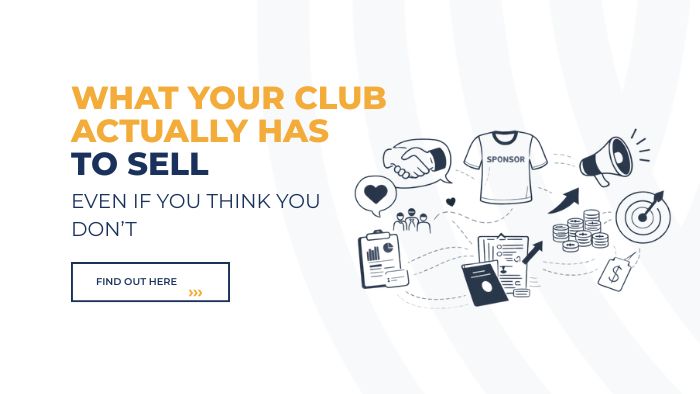
What Your Club Actually Has to Sell (Even If You Think You Don’t)

What Your Club Actually Has to Sell (Even If You Think You Don’t)

One of the most common beliefs that limits club sponsorship is the idea that “we don’t really have anything to offer.” This belief stops conversations before they even begin.

Most clubs underestimate their sponsorship value because they judge themselves by the wrong criteria. They focus on size, performance, or facilities. Sponsors don’t.

Sponsors care about reach, relevance, and trust. Community clubs often have deep connections with families, juniors, volunteers, and local supporters. That trust is difficult for
businesses to build on their own.

Clubs already have valuable assets through programs, events, communications, and regular engagement across a season. These assets may not look like traditional advertising products, but they create repeated exposure and association in a trusted environment.

The problem is that these assets are rarely identified, organised, or explained clearly. When clubs can articulate who they reach and how often, their value becomes obvious.

The value was always there. It just needed to be defined.

Understanding what your club already has to sell is the first step toward sustainable sponsorship. If you want help identifying and structuring these assets, start here.

Why Local Businesses Say Yes to Clubs (When It’s Done Properly)

Why Local Businesses Say Yes to Clubs (When It’s Done Properly)

Many clubs assume local businesses are tired of being asked for sponsorship.

In reality, many businesses are open to supporting clubs, but only when the opportunity makes sense. What businesses usually receive are vague emails asking for “support,” with little explanation of what is actually being funded or how the partnership would work. From a business perspective, saying yes to that kind of request feels risky.

Businesses are asking practical questions: What am I supporting?

Who will see this? How does this align with my customers? Will this be well run? If those questions aren’t answered clearly, hesitation is natural.

Local businesses respond when clubs provide clarity.

Defined initiatives, clear expectations, and professional communication signal that the club is organised and respectful of the sponsor’s investment. This immediately sets a club apart from most sponsorship requests.

It’s also important to understand that sponsorship is rarely about size.

Small and mid-sized clubs often outperform larger organisations when they are clear about who they reach and why that audience matters. A business would rather connect with the right local audience consistently than chase broad exposure with little relevance.

When clubs approach sponsorship properly, conversations become collaborative instead of awkward. Businesses feel invited rather than pressured. Trust forms, and relationships
develop over time.

Sponsors don’t say yes because they feel obligated. They say yes because the opportunity is clear, aligned, and credible

Clubs that approach sponsorship with clarity and structure see very different responses from local businesses. You can see what that looks like in practice here.

Why Most Club Sponsorship Approaches Fail (and What Actually Works)

Why Most Club Sponsorship Approaches Fail (and What Actually Works)

Many clubs work incredibly hard to secure sponsorship and still come up empty-handed. Emails are sent, follow-ups are made, and committees debate ideas late into the evening. Yet despite all that effort, results are often disappointing.

This usually isn’t because local businesses don’t care. It’s not because clubs don’t deserve support. And it’s certainly not because volunteers aren’t trying hard enough.

Most club sponsorship approaches fail for one simple reason: they are built on a fundraising mindset, not a sponsorship mindset.

Fundraising relies on goodwill

You ask for help because the club needs it. Sponsorship, however, relies on value. A sponsor is deciding whether an opportunity aligns with their business goals, audience, and brand.

When clubs approach sponsorship like fundraising, predictable problems appear. Requests are vague. Communications focus heavily on the club’s needs. There is often no clear initiative being sold, just a general request for “support this season.” From a business perspective, that creates uncertainty, and uncertainty leads to inaction.

Sponsors are not deciding whether a club is worthy. They are deciding whether the opportunity is clear, credible, and aligned with what they are trying to achieve. If those answers aren’t obvious, the safest option is to say no or simply not respond.

Clubs that succeed with sponsorship take a different approach

They lead with a specific initiative, such as junior development, community engagement, or participation growth. They understand what assets they have to offer and how those assets create value for a sponsor. And they approach businesses professionally, with structure rather than hope.

Importantly, this doesn’t require sales skills or pressure tactics. It requires clarity. When clubs shift from “Can you help us?” to “Here is an initiative that creates value, would you like to be involved?”, conversations change.

Sponsorship success isn’t about asking harder. It’s about presenting better.

If your club is tired of guessing with sponsorship and wants a clearer, proven approach, you can learn more about how we help clubs get sponsorship-ready here.

The First 60 Days of a Club Sponsorship: Do’s and Don’ts

Clubs often breathe a sigh of relief when a sponsor signs on. But securing the agreement is only the beginning. What happens in the first two months determines whether that sponsor becomes a long-term partner or a one-time supporter.

Do: Deliver Benefits Quickly

Sponsors should see their support acknowledged immediately:

  • Use the tier logos provided to you (gold, silver, bronze).
  • Post a thank-you on social media.
  • Feature them in your next event program.

These actions confirm that the club is organised and values the partnership.

Don’t: Leave Sponsors Wondering

Silence is a killer in the first 60 days. Avoid waiting months before delivering promised benefits. Sponsors should never wonder if you’ve forgotten them.

Do: Ask the Right Questions

Early conversations should include the sponsor’s objectives. Programs like Supercharger provide a “Sponsorship Objectives template” that clubs can use in meetings. By understanding what success looks like for them, you can tailor your acknowledgements and reporting.

Don’t: Over-Promise

Clubs sometimes agree to deliver benefits they simply don’t have the capacity to manage. Stick to what’s achievable. A smaller set of well-delivered benefits is far more valuable than a long list of broken promises.

Case Study Example

At Batemans Bay, club leaders reported that their new structured approach transformed sponsorship outcomes. By focusing on clear, early delivery, they built trust that led to ongoing support season after season.

The Payoff

The first 60 days aren’t just about keeping sponsors happy—they’re about setting up a system your club can replicate. Once the process is smooth, you can grow from one sponsor to many, building financial stability that frees your committee from constant fundraising pressure.

Handled well, those first two months are the foundation for sponsorships that grow year after year.

Moving Beyond Donations: How Clubs Can Offer Real Value to Sponsors

For many community clubs, the default approach to sponsorship is really just a donation request: “Would you like to support our club?” While well-meaning, this approach rarely secures significant funding. Sponsors aren’t looking to hand out cash—they’re looking for value.

Why the Old Model Fails

Businesses today want partnerships that deliver measurable outcomes. A simple logo on a jersey isn’t enough. Clubs that continue to treat sponsorship as charity find themselves stuck with small donations rather than sustainable support.

The Value Sponsors Are Looking For

Sponsors want:

  • Access to families and community networks.
  • Credibility by aligning with respected local organisations.
  • Opportunities to connect with potential customers at events.

By reframing sponsorship as a business decision rather than a favour, clubs can unlock far larger commitments.

Structured Programs Make the Difference

The Club Sponsorship Supercharger PLUS program guarantees $10,000 in sponsorship within 60 days. Why? Because it gives clubs the professional tools sponsors expect:

  • A tailored Sponsorship Invitation that demonstrates reach.
  • Category-specific email templates to approach the right businesses.
  • Professional packages that clearly show benefits at gold, silver, and bronze tiers.

This clarity turns “support our club” into “here’s how we can help you achieve business goals.”

Case Study: From Small Asks to Big Wins

The Batemans Bay Seahawks AFL club shifted from chasing small donations to securing major sponsorships. By focusing on what they could offer businesses—community presence, visibility, and strong engagement—they built relationships that delivered long-term revenue, not just one-off support.

Why This Matters for Committees

When a club adopts this professional approach, it changes the conversation at committee meetings. Instead of debating who will “ask for money,” the team collaborates on a sponsorship strategy that businesses respect.

Moving beyond donations isn’t just about raising more money. It’s about creating partnerships that last.

Why Committees Struggle with Sponsorship—and How to Fix It

If you’ve ever sat in a committee meeting where the idea of “finding sponsors” came up, you’ll know the familiar silence that follows. Everyone agrees sponsorship would help, but no one knows how to start—or worse, everyone assumes someone else will take it on. The result? Missed opportunities and another season of scraping by.

The Committee Challenge

Clubs don’t fail to attract sponsorship because businesses don’t want to support them. They fail because committees often:

  • Rely on outdated approaches (asking for donations rather than selling value).
  • Lack professional tools (no consistent packages or proposals).
  • Struggle with shared responsibility (one volunteer gets stuck doing it all).

When these roadblocks pile up, clubs miss out on thousands of dollars that could fund new uniforms, equipment, or junior development.

A Different Way Forward

Programs like the Club Sponsorship Supercharger are designed to break this cycle. Clubs that complete the program are shown how to:

  • Secure $3,000 within 30 days by approaching one key sponsor.
  • Build a dynamic Sponsorship Invitation document tailored to their reach and impact.
  • Use templates, scripts, and asset registers to approach businesses with confidence.

This structured approach shifts sponsorship from a vague committee wish to an actionable, repeatable plan.

Case Study: Batemans Bay Seahawks

The Batemans Bay Seahawks, a regional AFL club, transformed their sponsorship outcomes by implementing these strategies. Instead of relying on small donations, they engaged local businesses with a professional proposal that highlighted the club’s community reach. The result was not just one-off support, but a growing family of sponsors invested in the club’s success.

Fixing the Committee Bottleneck

The key to overcoming the committee hurdle is shared ownership. Instead of leaving sponsorship to one exhausted volunteer, successful clubs create a simple action plan that spreads the work. For example:

  • One member updates the asset register.
  • Another adapts the Sponsorship Invitation.
  • A third sends outreach emails to agreed business categories.

With professional tools, this work is light and clear—and results arrive quickly.

Why It Matters

A guaranteed first $3,000 is only the beginning. Once a club sees how easy it is to replicate the framework, they can grow sponsorship year after year, building financial security and freeing volunteers from endless sausage sizzles.

400% increase in sponsorship

400% increase in sponsorship

Keperra Country Golf Club had teed off their sponsorship program with more than a 400% increase in sponsorship revenue, and they’re just getting started.

We were pleased to work with General Manager Gavin Lawrence and his team to get Keperra Country Golf Club Sponsorship Ready.

“The professional selling tools that have come from the process are professional and now in line with how we as a club wish to see our brand be portrayed in the market. The results have been more than impressive and we are genuine contenders in assisting brands connect with the community and moreover deliver commercial return for investment,” said Gavin Lawrence, General Manager of Keperra Country Golf Club.

​“We have a strategy now and would recommend the program to any golf club seeking to go to the next level in raising revenue so they can continue to reinvest in the club and keep their members happy, healthy and active,” he added.

Congratulations to Gavin and his team on a great result. We can’t wait to see what the coming months deliver.

To learn more about the work undertaken by Keperra Country Golf Club with Sponsorship Ready, please click here.

Softball Queensland new partnership approach

Softball Queensland new partnership approach

Softball Queensland and CEO Ross Symonds were recently featured in an Australian Leisure Management article highlighting their new approach to sponsorship management.
An excerpt from the article:

Softball Queensland has unveiled its new approach to forming sponsorships in response to the ever-changing landscape of community and sports organisations.

With the industry still recovering after COVID-19, it has become more paramount than ever for organisations to encourage participation and demonstrate the value return for business sponsors.

Advising that the organisation’s approach to create partnerships involves understanding business objectives and tailoring a package to suit those needs, Softball Queensland Chief Executive, Ross Symonds explained “a partnership with Softball Queensland is not a request for philanthropy, with sizeable reach and impact a partnership can deliver on commercial, brand and community engagement objectives as well as help us keep Queenslanders fit, active and healthy.

“Softball Queensland is a powerful conduit to thousands of engaged and passionate supporters, players and volunteers across the state.”

Noting that sponsorship partnerships with Softball Queensland were beneficial as it promotes brand image, visibility and awareness, Symonds commented “through these vital partnerships we create a platform for our sponsors to showcase their own work and this delivers traffic to their businesses and websites.

“As well as raising brand awareness, Softball Queensland can offer prospective sponsors opportunities such as co-sponsor networking, community connection and strategies to enhance social media presence through campaigns.”

Softball Queensland and Sponsorship Ready designed the new approach to suit the changing landscape of community sports organisations and create meaningful sponsorship opportunities.

Sponsorship Ready Director Terry Johnston said it can take as little as 90 days to get sponsorship ready which is evident through Softball Queensland’s recent additions to its portfolio.

“Softball in Queensland has a story to tell (so) it comes as no surprise to me that Softball Queensland is getting interest in the market now – I have simply helped them tell their story in a way that appeals to sponsors.

“Softball Queensland has some great sponsorship assets that can deliver business objectives.”

To read the full article, click here.

Congratulations to Ross Symonds and the Softball Queensland team. It’s great to see your efforts recognised in the media.